Global, unique part identifiers

Avoid duplicate part numbers

Identify parts with unique GS1 codes

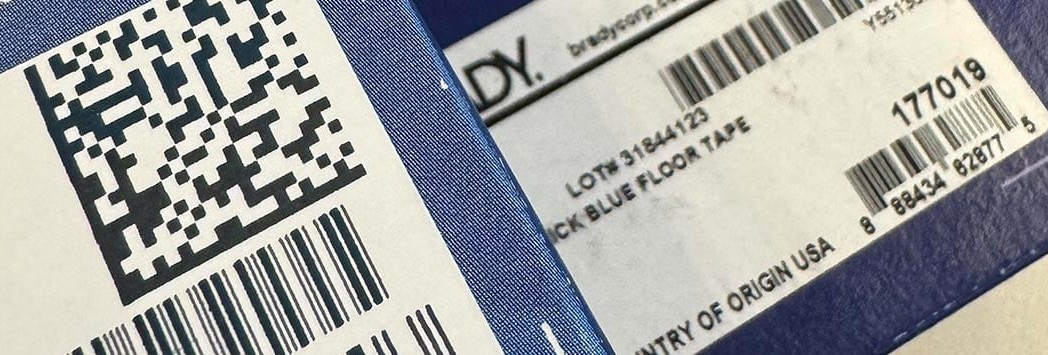
The classic, linear 1D barcode is about to retire. 2D barcodes, like DataMatrix and QR, are becoming the new standard. These next generation codes have the capacity to provide globally unique identification for any part and can optimally support digital twins and Internet of Things applications.

But how to make sure your part, product, parcel or location code is unique and easy to share? Enter the GS1 standard.


Physical to digital

Bridge physical items to their digital twin with a global identifier that uniquely identifies parts for their lifecycle.

Discover more
 

Print GS1 codes

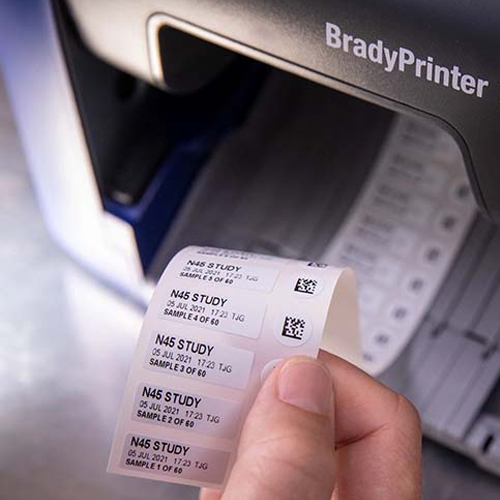
Print highly scannable 2D codes in small font sizes with professional 300 and 600 dpi precision label printers.

Discover more
 

Read GS1 codes

Accurately read all information 2D codes can offer, from any angle, with advanced data capture technology readers.

Discover more

Physical to digital

GS1 identification keys enable the creation of globally unique identifiers, governed by strict management rules, to avoid that two physical entities would share the same digital identity.

Unique identifier keys are licensed by GS1, and exist in several formats:

GS1 ID Key GS1 Key Name Definition
GTIN Global Trade Item Number Uniquely identify any trade item
GLN Global Location Number Uniquely identify company locations
SSCC Serial Shipping Container Code Identify combinations of trade items in logistics units
GRAI Global Returnable Asset Identifier Individually track returnable transport units
GIAI Global Individual Asset Identifier Uniquely identify fixed assets such as machines
GSRN Global Service Relation Number Uniquely identify service relationships
GDTI Global Document Type Identifier Uniquely identify documents worldwide
GINC Global Identification Number for Consignment Identify one or more logistic units as a consignment
GSIN Global Shipment Identification Number Identify a shipment of logistics units for delivery as a whole
GCN Global Coupon Number Uniquely identify coupons
CPID Component/Part Identifier Identify parts from OEM to assembly and MRO
GMN Global Model Number Uniquely identify the product model

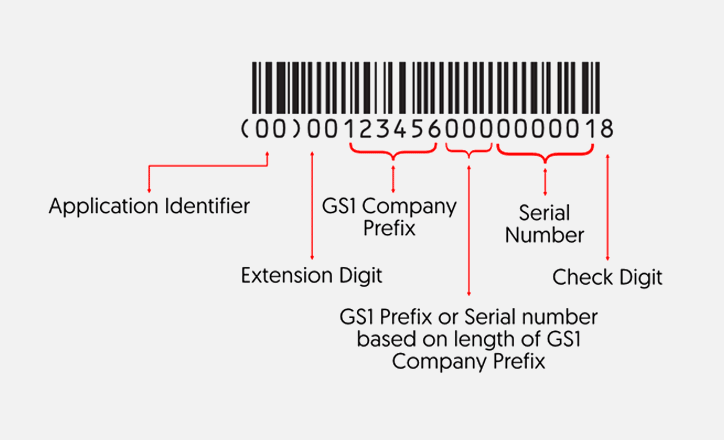
A complete GS1 code will include a company prefix, an item or reference number and a mathematically derived digit that validates the code’s integrity. These can be joined by application identifiers, batch numbers, location references and an indicator or extension indicator, depending on the type of code.

Printing GS1 codes

GS1 codes can be serialised and printed as 2D datamatrix codes, QR-codes and others that can hold vastly more data than the traditional 1D barcode. To reliably print these codes in an easy-to-scan resolution, professional label printers are a great solution.

300 dpi printers can already print 2D codes, 600 dpi printers can print them reliably in smaller sizes, important when item surface and packaging area come at a premium.


Factory printed

Let the labels you need be delivered ready to apply by a Brady factory close to your facility. Order logos, complex layouts, fields you can finalise with your printers, embedded sensors and encoded RFID chips.

Contact us today

Reading GS1 codes

2D barcodes

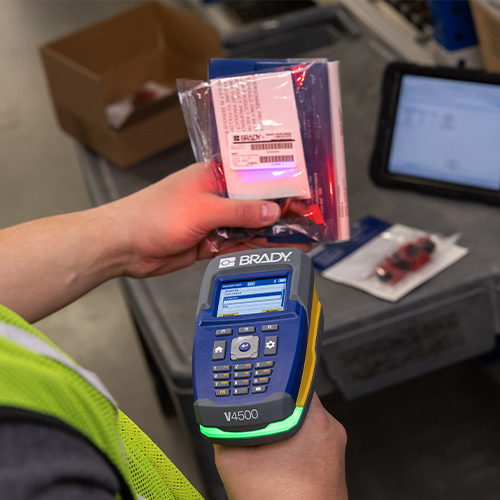
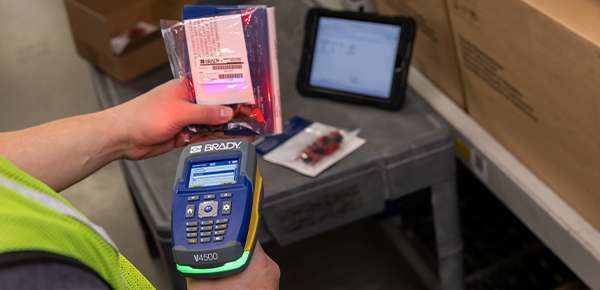
Classic laser scanners cannot read 2D barcodes like DataMatrix or QR-codes. Instead, area image readers capture the full picture. They use advanced digital image processing to decode the relevant information.

Advanced 2D barcode readers also provide:

  • Omnidirectional scanning: barcodes can be read from any angle, significantly increasing operator flexibility
  • Damaged code reading: built-in algorithms correct damaged, dirty and distorted codes to maintain traceability
  • Reading from screens: easily read 2D barcodes, even on reflective surfaces to optimally support paperless processes
Discover our barcode readers

RFID codes

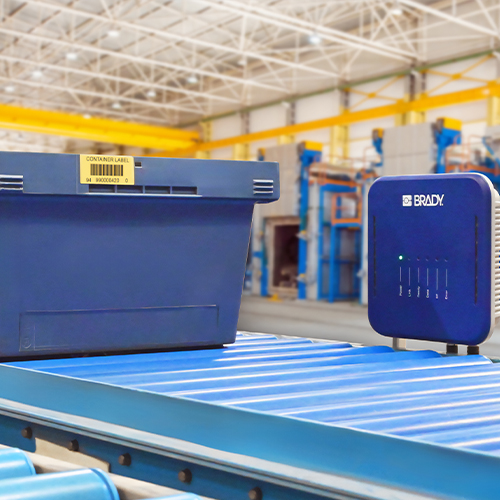
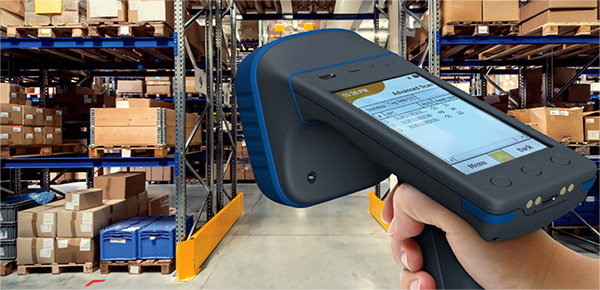
GS1 codes can be called on by radiofrequency technology. With battery-free, passive UHF RFID labels that reflect the radio signals from RFID readers, items can be pinged from a distance, multiple times per second, at any location with minimum friction.

Advanced RFID readers provide:

  • Range: read passive, UHF RFID labels from a 15 metre distance with fixed or portable RFID readers
  • Edge processing: parse data at the edge, in fixed RFID readers and share data in up to 7 industrial protocols
  • Home-in: close in on any UHF RFID labelled tool with sound and visuals on a portable RFID reader
Discover our RFID readers

All-in-one reader

Need a flexible solution that reads any code? Accurately scan 1D barcodes, datamatrix, QR and a host of 2D barcodes from any angle, and RFID from a 15m distance.

Read any code


All codes on your phone

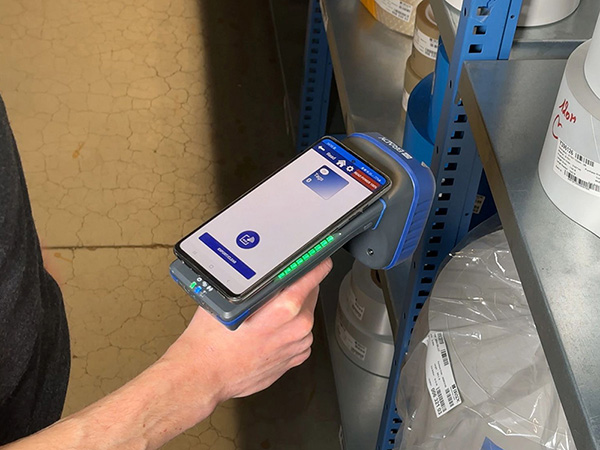
Read and create any 1D and 2D barcode on your phone with the free BradyScan app. Easily share your code with BradyPrinters.

Discover the app

From internal to global SKU’s (why)

Global interoperability, enhanced inventory accuracy and regulatory compliance are important supply chain management benefits. Globally unique identification codes are indispensable to enable these advantages.

GS1 identification codes enable a more thorough digitalisation of supply chains by permanently linking each item and factor to its digital twin. Mastery of this globally standardised barcode language can enable considerable advantages in logistics, supply chain management, compliance and overall cost control.

How to prepare?

  • Standardise: start migrating from internal SKUs to the global GS1 code language to eliminate data silos, avoid staggering cost and support regulatory compliance in global trade.
  • Precision print or program: set up the capability to print, laser, engrave or program scannable 2D barcodes or RFID codes, or a combination of both.
  • Advance data capture: implement advanced barcode or RFID readers that can capture the information provided by GS1 codes.

DPP compliance

Looking to comply with the European Union’s Digital Product Passport regulations? Get expert information on identification solutions that enable compliance - without slowing down production.

Contact Us

Solution components

We supply all components of our solution and can have them integrated with existing software and database systems. Based on your work environment and requirements, our identification specialists can advise an optimal solution to identify at production pace.

Further reading