Custom RFID labels

Versatile solutions for industry needs

Get in touch

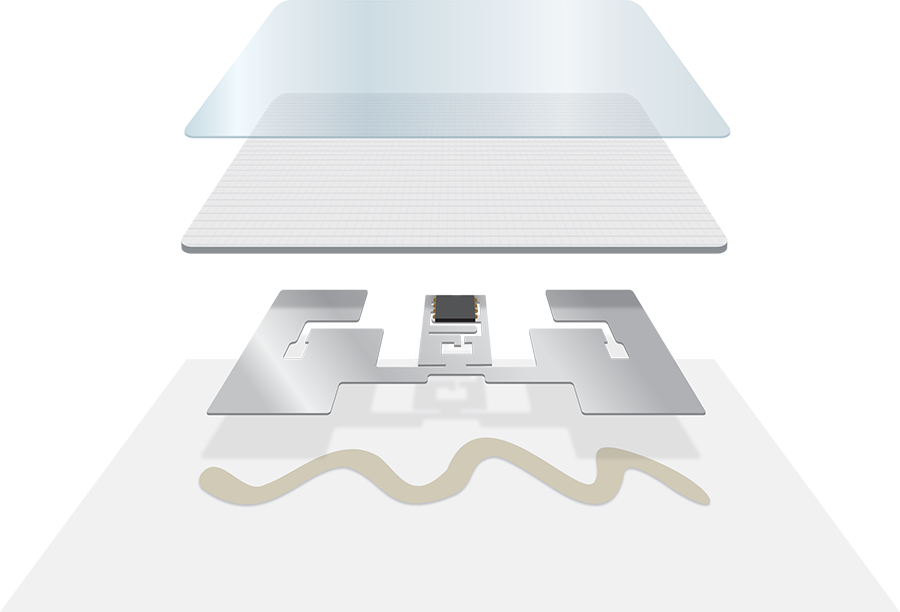
Customisable RFID labels give every asset and product a unique digital identity. This allows you to track and manage assets and products more effectively in many different industrial environments. At Brady, we design the RFID labelling solution best suited to your needs, with a customised antenna, chip, label material, adhesive and printing. Let's take a look at our custom RFID labels to find the right solution for your business.

Why choose custom RFID labels?

By choosing custom RFID labels, you can improve supply chain management of items and products, authentication and user interaction via readers, smartphones or even both. Fully customisable RFID labels give companies the flexibility to design labels that meet their specific needs. You can choose the size, topcoat, adhesive, shape, and printing options that match with your branding and operational requirements. It also improves efficiency, allowing you to choose the right label that you can manage in different industrial environments. At Brady, we offer reliable industrial-grade UHF long-range tags, NFC/HF short-range tags or a combination of both frequencies.

Explore tailored RFID Success stories

Advanced RFID Technology for any application

RFID (Radio Frequency Identification) technology uses radio waves to identify and transmit information. RFID technology is primarily used for various applications in various industries such as logistics and supply chain and manufacturing. RFID tags can also be customised, for example for battery EV customers. This will allow them to not only track and trace their inventory but also monitor the battery’s temperature, adding a layer of security. Moreover, you can customise labels to meet the needs of your applications. RFID tags can also contain sensors that can be activated by handheld or fixed readers on demand or at pre-programmed intervals, such as temperature trackers, moisture sensors,.... All of Brady custom RFID labels are compatible with any RFID printer available on the market.

Battery-free RFID

Battery-free RFID solutions


Self-powered or passive RFID tags aren't powered by batteries, but by the radio frequency energy transmitted by RFID readers and antennas. The signal from the reader and antenna is used to power up the tag and send energy back to the reader. The battery-free smart solution reduces the environmental impact of batteries and promotes more sustainable and circular use. Also, the tags and labels can be maintained more easily.

Sensor integration RFID

Sensor integration for real-time monitoring


Custom RFID tags allow you to choose a sensor integration for real-time monitoring. Our RFID tags enable you to track your assets and manage inventory efficiently in complex industrial environments, and are adaptable to any surface. You can also remotely monitor the temperature of your assets/products with temperature-indicating RFID tags that require no power or maintenance. If you need to monitor moisture, choose a tag with a capacitive sensor that detects moisture on surfaces and whose data can be easily read by UHF RFID readers.

LED label RFID

Embedded LED lighting for easy identification


You can customise your RFID tags with LED lighting. Our RFID LED tags make 'Pick to Light' systems easy. Simply read a specific tag from a distance of 3.5 metres to activate the LED light and speed up locating a specific item or location.

Customisation options for your specific needs

Our RFID labels offer the ideal RFID labelling solution for your operations and your application environment. At Brady, we can customise every component of the label to best solve your identification problems. How custom RFID labels transformed asset tracking? Read our case study now!

label size and shape

Label size and
shape

Some RFID applications require a customised label size or shape. RFID tags can be integrated into a variety of label sizes and materials your application requirements. At Brady, we offer RFID labels and inlays in a wide range of shapes and sizes so that the ideal tag can be perfectly matched to the items or products that you want to identify. It is important to know that the size of the label (and RFID inlay) is directly connected with its size: the bigger the label, the longer the read range.

Material and adhesive selection

Adhesive and
material selection

When ordering custom RFID tags, you need to consider the type of material you need. You can choose from any topcoat material. Price conscious paper labels, higher performing polyester or polypropylene, and even high temperature resistant Polyimide. As for the adhesive, Brady offers different label properties: aggressive adhesive, high or low temperature application or other harsh environments, and also permanent or removable adhesive. You can also choose the frequency type: HF, NFC, UHF or Dual frequency, combining UHF and HF.

surface consideration

Environmental and
surface considerations

When ordering custom RFID tags, you need to consider the surface materials of the item to be tagged. RFID tags are known to work well on plastic, wood and cardboard. However, it can be more complicated if the items are made of metal, glass or liquids. These materials can interfere with the communication between the RFID reader and the tag. You may need an RFID label that adheres to cables or painted surfaces, and is also resistant to chemicals, oil, dirt or extreme temperatures. At Brady, we offer a range of label designs to ensure optimum adhesion to all surfaces and reliability in any environment.

How to get started with Brady's custom RFID labels

Brady can help you choose the optimum label design for your application. If you're not sure about what type of smart labels and RFID tags you need, or if you have any questions, please don't hesitate to contact us. Let's take a look at the 6 steps to creating your perfect custom RFID labels with Brady.

customise your labels

Frequently asked questions about custom RFID labels

We've put together a list of the most frequently asked questions about custom RFID labels.

What is a custom RFID label?

How do I choose the right RFID label for my application?

How does sensor integration in RFID labels work?

Can RFID labels be customised for specific environmental conditions?

We hope that this article has answered most of your key questions. If you have any further questions about our custom RFID labels, please do not hesitate to contact our custom solutions team.